I study how complex systems adapt and remain stable.
I'm Thomas Richner, a research scientist at Mayo Clinic. I combine mathematical analysis with numerical experiments to investigate learning, adaptation, and recurrent systems.
Mathematical models. Numerical experiments. Systems built to test ideas.
01 / Learning & stability
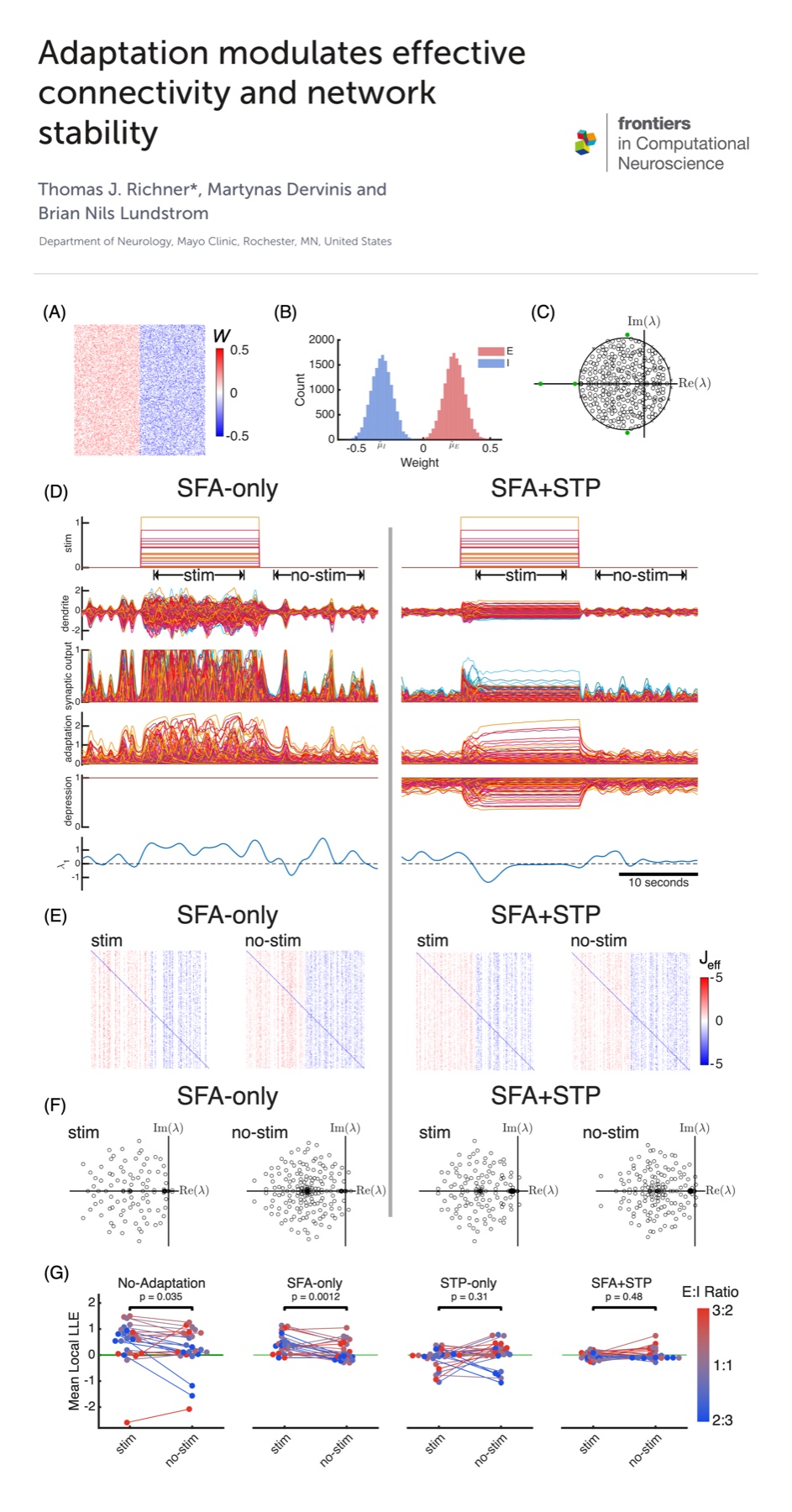
The dynamics of adaptation.
I investigate how adaptation shapes effective connectivity and stability in recurrent networks. My current research asks how networks can learn through local rules while maintaining stable dynamics.
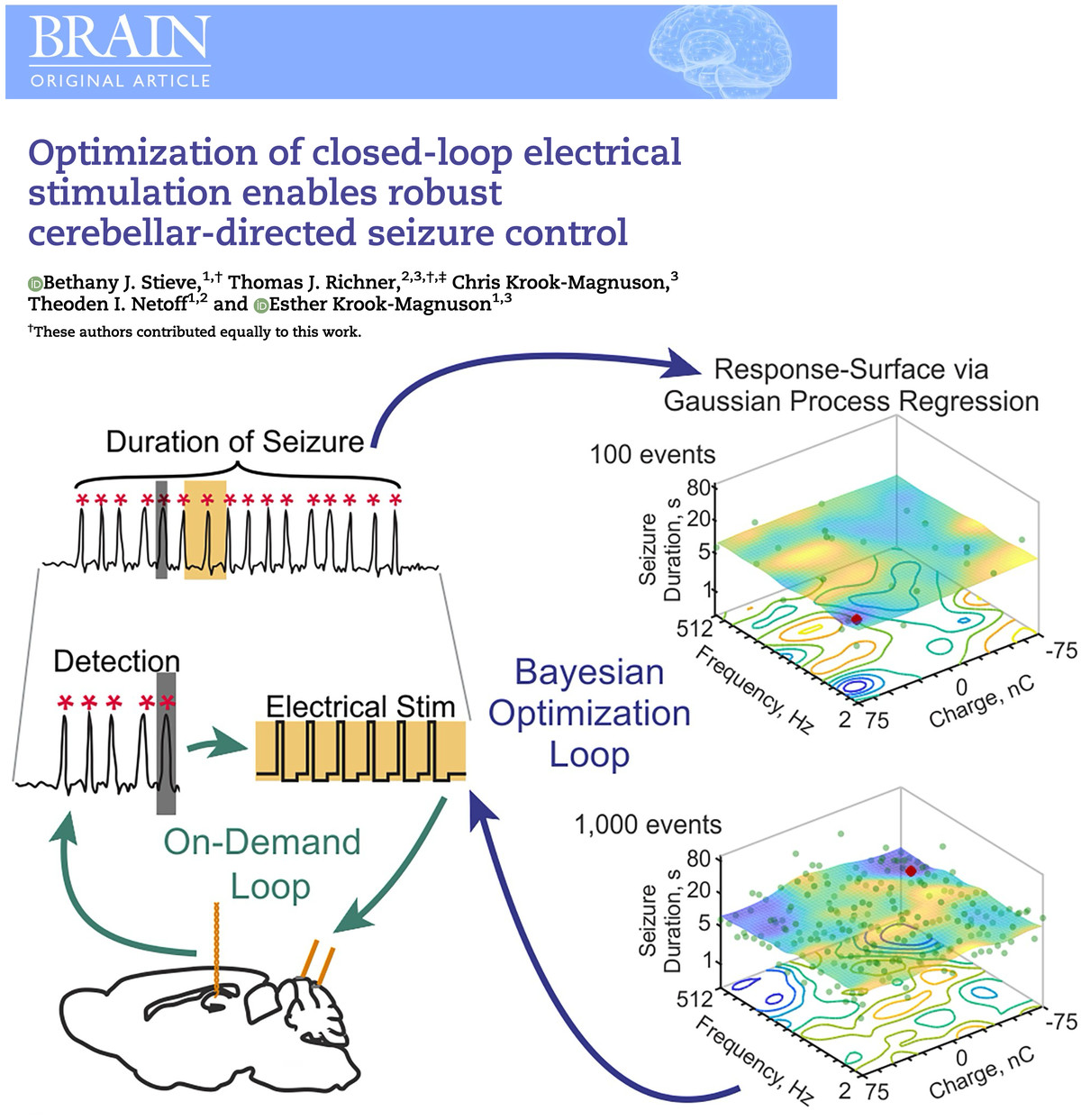
Using Gaussian process models and Bayesian optimization to guide the search for effective stimulation parameters in a closed-loop seizure-control system.
My broader research interests concern how intelligent systems learn and adapt—particularly continual learning, local learning, and efficient recurrent architectures.
01
Learning over time
Continual and federated learning. Preserving useful behavior as systems adapt.
02
Local rules, global behavior
Stability in recurrent networks with local learning. The relationship between optimization and dynamics.
03
Structure and uncertainty
Compositional architectures, Bayesian methods, and efficient ways to explore difficult problems.
Background
From mathematical ideas to working systems.
My background spans mathematics, computational modeling, and engineering. Across research in optimization, neural dynamics, and neural interfaces, I move between theory, numerical methods, and experiments.
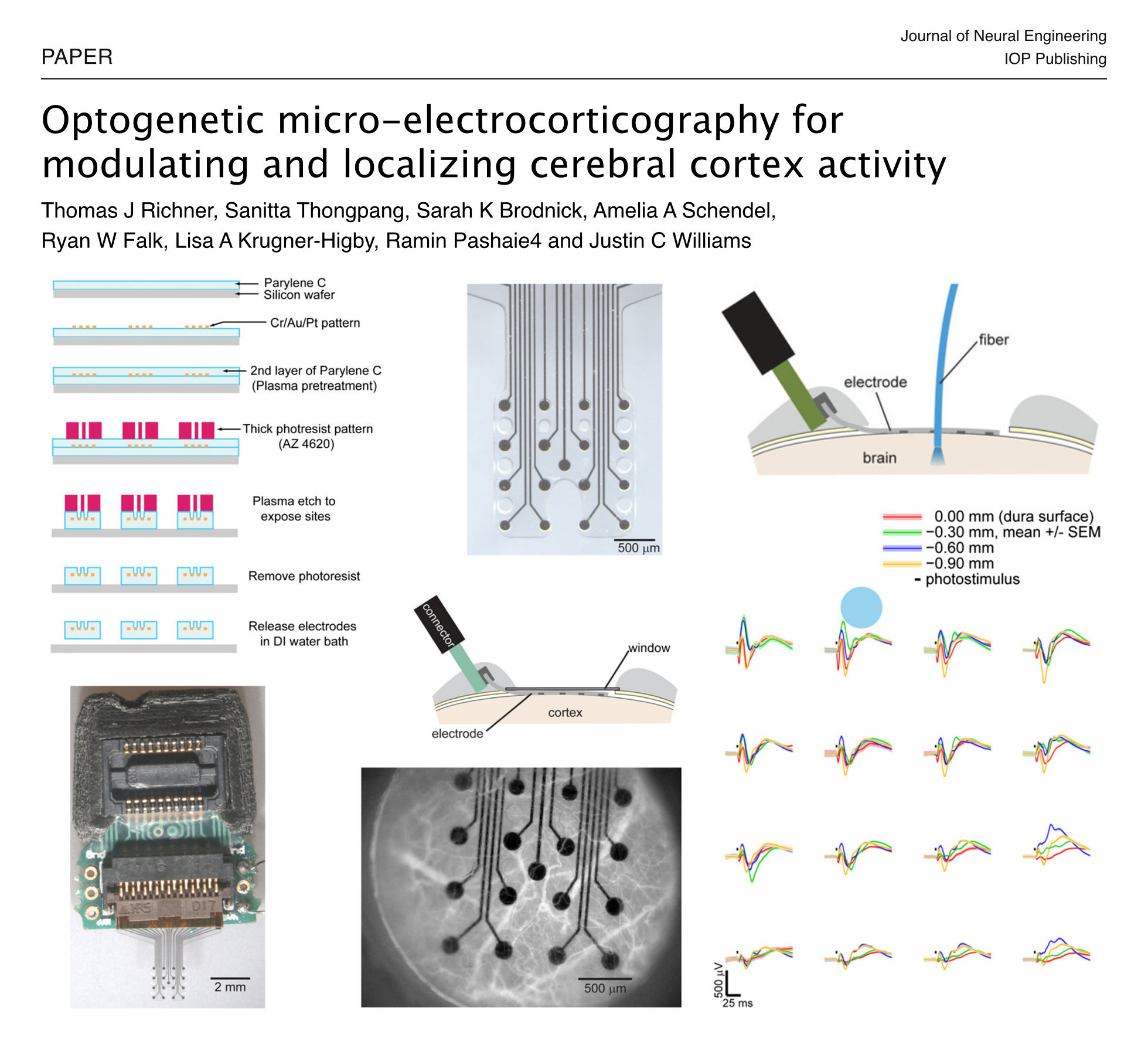
At Mayo Clinic, I investigate network stability and use electrical brain stimulation for system identification. My broader interests connect this work to foundational questions in AI.